

November 2025
Updated multiple sclerosis diagnostic criteria may enable earlier diagnosis
By Rebecca Jenkins
Revised international criteria for diagnosing multiple sclerosis (MS) will pave the way for earlier diagnosis and treatment to improve patient outcomes, an Australian expert predicts.
Published in The Lancet Neurology, the 2024 McDonald diagnostic criteria were drawn up by 56 international contributors from 16 countries, including Australia, with expertise in a range of disciplines including neurology, neuroradiology and neuro-ophthalmology, as well as people with lived experience of MS.
Advances in the understanding of MS and the development of pathophysiological biomarkers prompted a review of the criteria, which were last updated in 2017.
Among the revisions, the 2024 criteria provide a unified approach to diagnosing MS in people with relapsing or progressive courses of the disease from paediatric to later-life presentations. They also now allow the diagnosis of MS in some people who have typical scan features of the disease but have never had symptoms.
‘The 2024 McDonald criteria are based on the most robust evidence, extend the boundaries of previous criteria, and lay the groundwork for future innovations based on the updated mechanistic framework for disease progression,’ the authors wrote.
Contributing expert author, Professor Helmut Butzkueven, Head of the Department of Neuroscience at the School of Translational Medicine, Monash University, and Director of Neurology at Alfred Health, Melbourne, said the revisions would allow an earlier diagnosis and therefore treatment for people with MS, which could markedly reduce long-term impairment and disability.
Professor Butzkueven said it was a particularly crucial revision to allow for an MS diagnosis where features of the condition were discovered incidentally during a brain MRI in a patient with no clinical symptoms.
‘I think this is the most important change: that people who are found to have very early MS just with abnormal MRI scans, can now be diagnosed with MS if they meet other criteria,’ he told Medicine Today.
‘This is a unique opportunity to treat the disease before it causes any symptoms, a bit like detecting an early cancer by screening tests before it causes any symptoms.’
Professor Butzkueven said the second most important change was a move towards ‘reunification’ of relapsing-onset and progressive-onset MS.
‘We have realised that different types of MS actually all have the same kind of features on MRI scans and their pathology is identical,’ he said. ‘With the new criteria, we aim for a “biological classification of MS” to reduce the previous emphasis on different subtypes,’ he said.
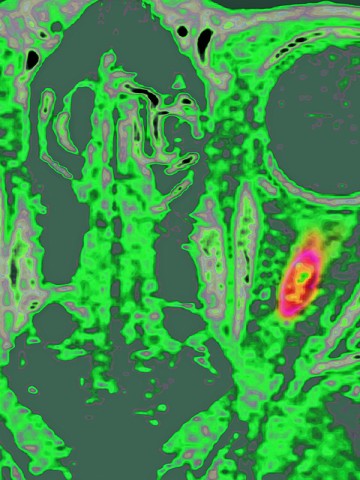
Other changes reflected specific features of MS lesions on MRI and the incorporation of those features into the diagnostic criteria, Professor Butzkueven said. These included allowing the optic nerve to serve as a fifth anatomical location within the central nervous system for diagnosis, in addition to the periventricular, cortical or juxtacortical, infratentorial brain and spinal cord regions.
Experts also agreed to allow the central vein sign, paramagnetic rim lesions and kappa free-light chain concentrations in central spinal fluid to be used to provide supportive evidence and confer specificity for an MS diagnosis in certain situations.
The International Advisory Committee on Clinical Trials in Multiple Sclerosis led the initiative to revise the criteria, with the US National Multiple Sclerosis Society and the European Committee for Treatment and Research in Multiple Sclerosis acting as co-sponsors.