
Peer Reviewed
Feature Article Cardiovascular medicine
Stroke and TIA: crucial knowledge for a critical event
Recent articles on:
Transient ischaemic attack
Transient ischaemic attack
Recent articles on:
Stroke
Stroke
Abstract
Rapid and accurate recognition of acute stroke symptoms is essential for the timely referral of patients with acute stroke or TIA to hospital for reperfusion therapy, including endovascular clot retrieval. GPs are well placed to implement and monitor secondary prevention strategies for these patients.
Key Points
- Accurate diagnosis of stroke relies on the identification of acute onset focal neurological syndromes.
- Rapid assessment, triage and management are essential in patients with acute stroke.
- Patients with a transient ischaemic attack should be rapidly assessed and investigated, especially for symptomatic carotid stenosis and atrial fibrillation.
- When an acute stroke is recognised in the community, the patient should be transferred by ambulance to the nearest hospital with the appropriate stroke services.
- Premedication with aspirin is not appropriate as it is impossible to confidently distinguish ischaemic stroke from intracerebral haemorrhage without a CT scan of the brain.
- The GP plays a crucial role in the secondary prevention of stroke, both lifestyle and pharmacological interventions.
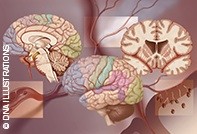
Picture credit: © DNA Illustrations.
Get full access
Buy this article
Single article purchases are temporarily unavailable due to site maintenance.
If you would like to purchase an article during this time, please email us at [email protected] with the article details and we'll assist you directly. We'll also let you know when online purchasing is available again.
Thank you for your patience and understanding.
Already a subscriber? Login here.