

March 2026
Neither paracetamol nor ibuprofen appears to increase eczema or bronchiolitis risk in infants
By Sasha Ellery BM BCh
Paracetamol used for fever or pain in the first year of life does not appear to increase the risk of eczema or bronchiolitis by 1 year of age compared with ibuprofen, reports a large randomised controlled trial published in The Lancet Child & Adolescent Health.
The multicentre, open-label trial was conducted in New Zealand and enrolled 3923 infants younger than 8 weeks of age who were randomised to use either paracetamol alone or ibuprofen alone as needed for fever or pain until age 12 months. Outcomes were assessed using parent questionnaires and national health datasets.
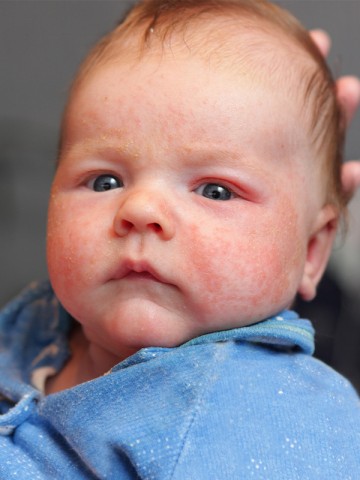
In the first year of life, eczema occurred in 16.2% of infants assigned to paracetamol and 15.4% assigned to ibuprofen. Hospitalisation for bronchiolitis (defined as at least one admission coded as bronchiolitis, viral-induced wheeze or asthma) was also similar: 4.9% in the paracetamol group versus 4.3% in the ibuprofen group. There was no significant difference between both groups for either eczema or bronchiolitis.
Speaking to Medicine Today, Associate Professor Philip Britton, a Paediatric Infectious Diseases Physician at The Children’s Hospital at Westmead, Sydney, said the results were reassuring for parents. ‘Ibuprofen and paracetamol used at moderate levels in the first year of life (median 16 doses of paracetamol and 10 doses of ibuprofen) are equally very safe in young infants,’ he said.
Serious adverse events were uncommon in both groups, and none were attributed to the trial medications, offering additional reassurance about the use of paracetamol or ibuprofen in infants for treating pain or fever.
‘Randomised trials (when done well, as this study was) provide better evidence of causal relationships than observational studies,’ Associate Professor Britton said. ‘As such, this study is the best evidence that there is no additional risk of eczema or bronchiolitis (early wheezing) at 1 year of age when using paracetamol compared with ibuprofen.’
The study authors concluded that decisions about using paracetamol or ibuprofen in infancy should be guided by the need for symptom relief, as there was no observed link between these medications and adverse effects in the short or medium term.
‘When treating fever or pain in young infants, as always, parents should use medication judiciously and at doses within the bounds specified on the products used,’ Associate Professor Britton noted. ‘There remain some concerns regarding ibuprofen use in neonates or in children with kidney disease, dehydration or other chronic health problems.’
Longer-term follow up of the cohort to age 6 years is ongoing to assess whether early exposure affects later asthma risk.