
Peer Reviewed
Feature Article Renal medicine
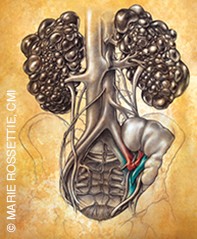
Management of autosomal dominant polycystic kidney disease
Recent articles on:
Kidney failure
Kidney failure
Recent articles on:
Kidney diseases
Kidney diseases
Abstract
Autosomal dominant polycystic kidney disease is the fourth most common cause of end-stage kidney disease in Australia. GPs play an important role in all aspects of management, including initial diagnosis, treatments to slow disease progression, monitoring for complications and screening of at-risk family members.
Key Points
- Autosomal dominant polycystic kidney disease (ADPKD) is a genetic condition characterised by the formation of multiple fluid-filled renal cysts and kidney enlargement.
- Complications of ADPKD include end-stage kidney disease, early-onset hypertension, nephrolithiasis, intracranial cerebral aneurysm and polycystic liver disease.
- Symptoms typically do not appear until after early to middle adulthood, and individual lifetime risk of renal failure varies markedly.
- Renal ultrasound examination remains the preferred imaging modality for diagnosis and family screening.
- Management includes referral to a nephrologist, genetic counselling, education, dietary and lifestyle treatments to slow progression of kidney disease, antihypertensives and monitoring for systemic complications.
- Disease-modifying treatments to slow cyst growth (e.g. tolvaptan) are in development.
Get full access
Buy this article
Single article purchases are temporarily unavailable due to site maintenance.
If you would like to purchase an article during this time, please email us at [email protected] with the article details and we'll assist you directly. We'll also let you know when online purchasing is available again.
Thank you for your patience and understanding.
Already a subscriber? Login here.