

August 2025
Hearing aids and cochlear implants linked with improved social outcomes
By Melanie Hinze
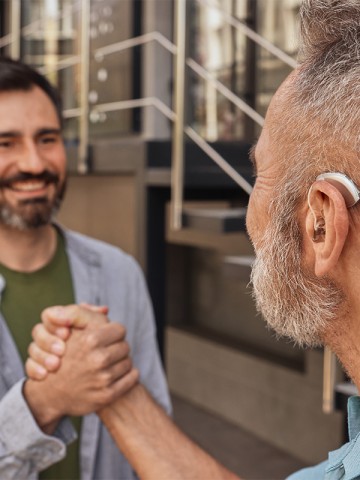
Hearing interventions, including hearing aids and cochlear implants, are associated with improved social outcomes for adults with hearing loss, a systematic review of 65 studies and meta-analysis of 35 studies has found.
The study, published in JAMA Otolaryngology–Head & Neck Surgery, included 5911 participants in the systematic review (mean age 64.1 years; 49.4% female) and 2664 participants in the meta-analysis (mean age 65.9 years; 46.3% female).
Hearing rehabilitation with hearing aids and cochlear implants was associated with improved social outcomes, including higher social quality of life and decreased perceived social handicap and loneliness.
Hearing aids were associated with a moderate improvement in social quality of life compared with baseline or control groups, whereas cochlear implants demonstrated a larger improvement.
Professor Piers Dawes, Director of the Centre for Hearing Research (CHEAR) at The University of Queensland, Brisbane, said that the results made sense.
‘Cochlear implants restore functional hearing to people who have severe hearing loss while hearing aids incrementally improve audibility of sounds that were previously partially audible,’ he said. ‘In other words, cochlear implants make a bigger difference than hearing aids.’
The study authors recommended that hearing aids and cochlear implants be promoted to help ensure social engagement and functioning in daily life.
‘By enhancing social interactions and reducing isolation, hearing interventions have the potential to positively impact overall well-being for adults with hearing loss,’ they wrote.
Professor Piers agreed, saying that ensuring good hearing promoted a healthy, active, socially engaged lifestyle.
However, Professor Piers said one possible limitation was that the review concentrated on hearing devices.
‘There are additional benefits for hearing rehabilitation strategies that address the psychosocial impacts of hearing loss – communication training, for example,’ he said.
‘Device-based interventions may be more effective (especially with respect to psychosocial outcomes like social engagement) if combined with a hearing rehabilitation program (for example, the Active Communication Education [ACE] Program that is offered by Better Hearing Australia and some Hearing Australia clinics,’ he added.
JAMA Otolaryngol Head Neck Surg 2025; doi: 10.1001/jamaoto.2025.177.