
Peer Reviewed
Feature Article Respiratory medicine
Early COPD. How to identify it and is it worth treating?
An updated version is available in the
linked supplement
Recent articles on:
COPD (chronic obstructive pulmonary disease)
COPD (chronic obstructive pulmonary disease)
Abstract
Case finding of airflow limitation and COPD is an important step to be undertaken by GPs in individuals at risk to help address the increasing burden of this condition in the community.
Key Points
- Detecting airflow limitation when the patient has no symptoms and confirming the diagnosis of COPD by spirometry identifies individuals at risk of future symptoms, increased decline in FEV1 and complications of the condition.
- Better stratification of future risk by actively diagnosing COPD (case finding) may alter management in those with additional risk factors for COPD progression and cardiovascular risk.
- Performing spirometry in current smokers may increase smoking cessation.
- An asymptomatic patient with a new diagnosis of airflow limitation should be monitored for decline in FEV1, onset of COPD symptoms and occurrence of exacerbations.
- Confirmation or exclusion of COPD allows appropriate drug prescription and helps avoid diagnostic confusion.
- Management of COPD continues to evolve as understanding of the disease increases, particularly appreciation of its heterogeneity.
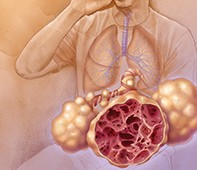
Picture credit: © Molly Borman Biomedical Illustrations, Inc.
Get full access
Buy this article
Single article purchases are temporarily unavailable due to site maintenance.
If you would like to purchase an article during this time, please email us at [email protected] with the article details and we'll assist you directly. We'll also let you know when online purchasing is available again.
Thank you for your patience and understanding.
Already a subscriber? Login here.