
Alirocumab and evolocumab: a new era in cholesterol control
Lipid disorders
Heart diseases--prevention
Despite ‘scare-mongering’ in the lay and some medical media, statin therapy to reduce elevated LDL cholesterol (LDL-C) levels is effective in reducing future cardiovascular (CV) events, this being accompanied by an acceptable side effect profile. Regrettably, long-term statin therapy does not abolish CV risk, either because there is a residual elevation in LDL-C or because patients cannot tolerate statins (principally because of muscle problems) or other causal factors are at play. This important unmet need may be addressed in part by a new type of therapy: inhibitors of the enzyme proprotein convertase subtilisin-kexin type 9 (PCSK9).
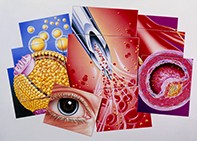
Picture credit: © John Bavosi/SPL
Single article purchases are temporarily unavailable due to site maintenance.
If you would like to purchase an article during this time, please email us at [email protected] with the article details and we'll assist you directly. We'll also let you know when online purchasing is available again.
Thank you for your patience and understanding.